Landing rebuild, part 7: One act built before the page. The animatic and its numbers.
By the Borker Team
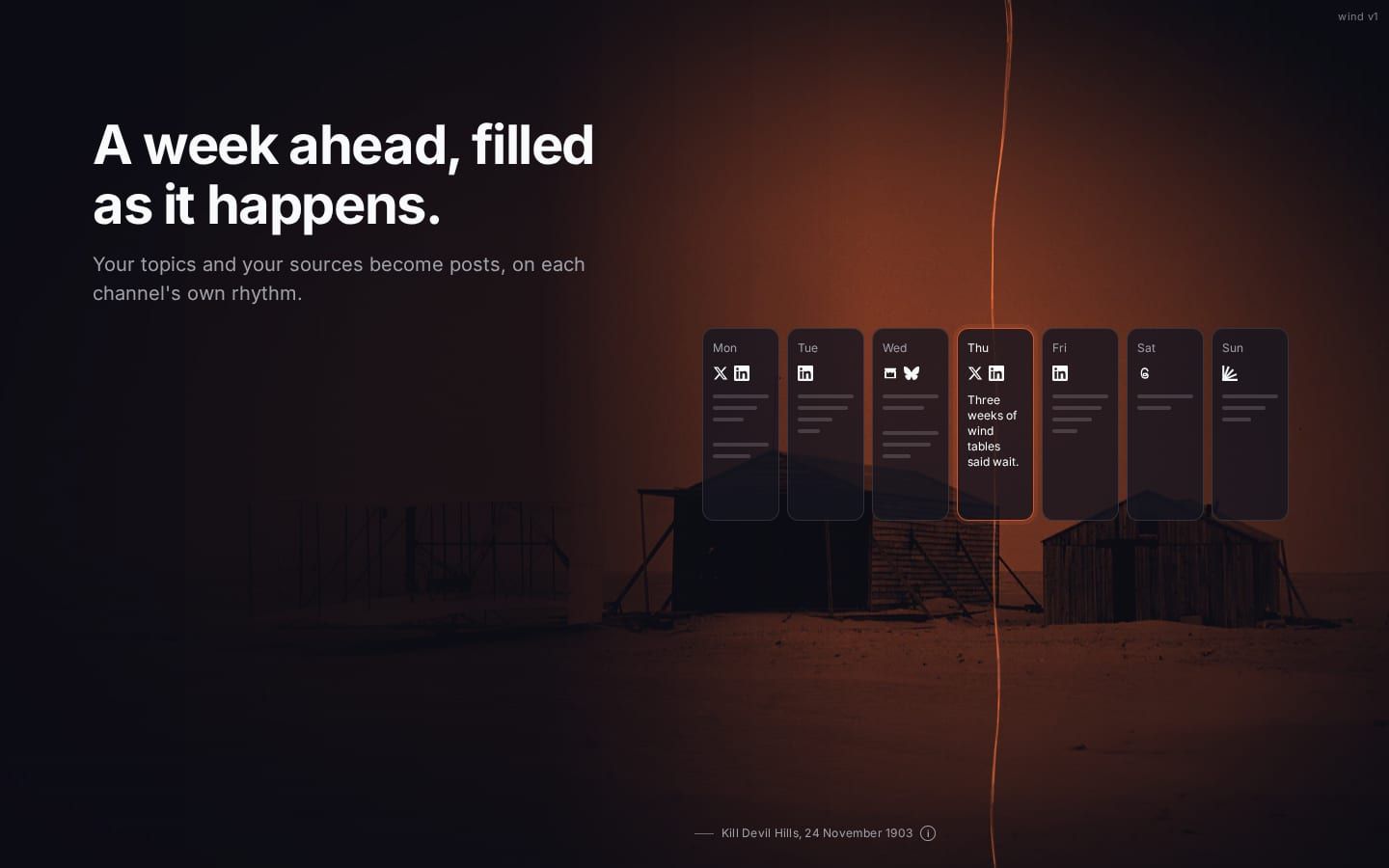
Part 7 of eight on rebuilding our landing page. Part 6 is the wind lab, the CPU rule and the asset kit. The hub lists every part.
Why one act first
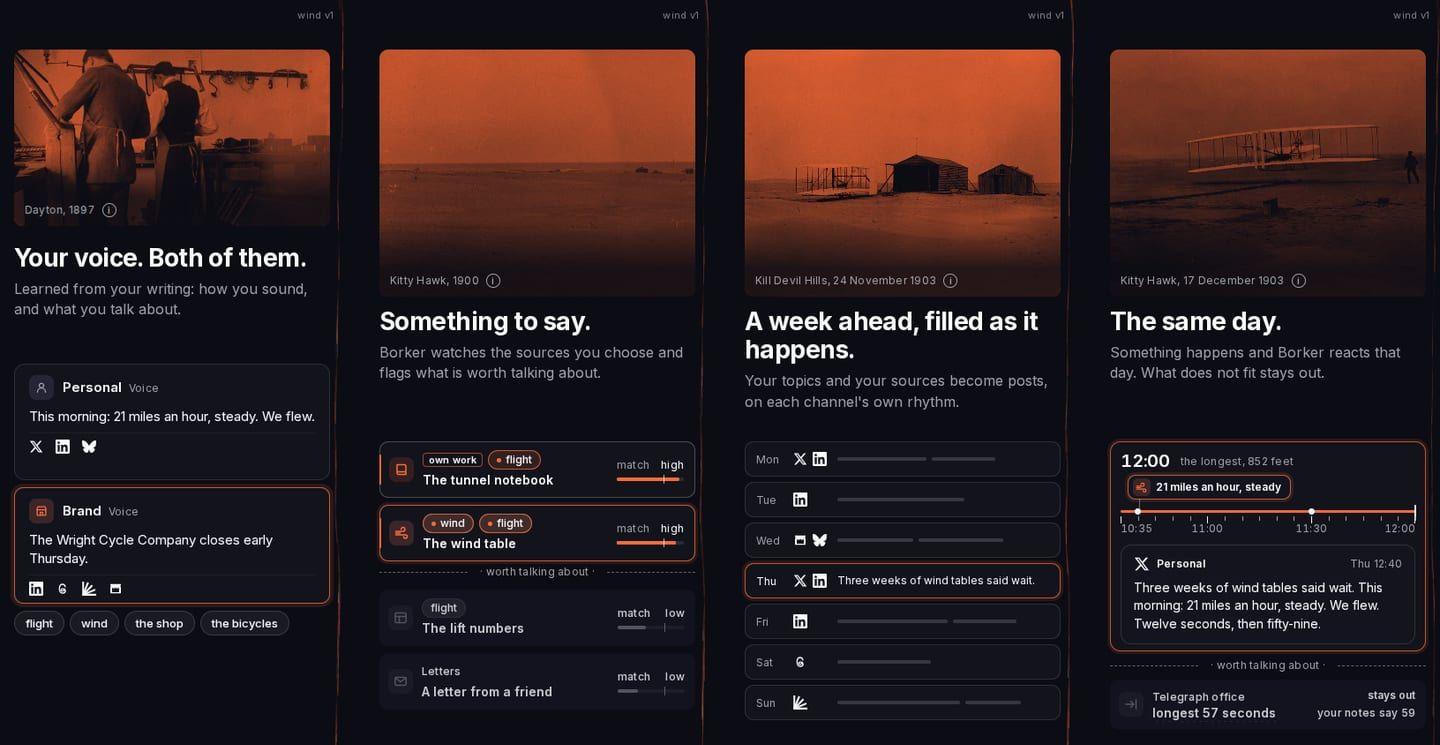
The motion is the idea of this page. Each beat transforming into the next is what says what Borker does. If that does not carry, or does not run on a phone, the plan has to change before the page is built, not after. So the fourth stage built one act for real: Sources, The plan and The day, the three screens where the most happens. Scroll-driven, at desktop and phone width. Every number from the motion sheets measured in a headless browser.
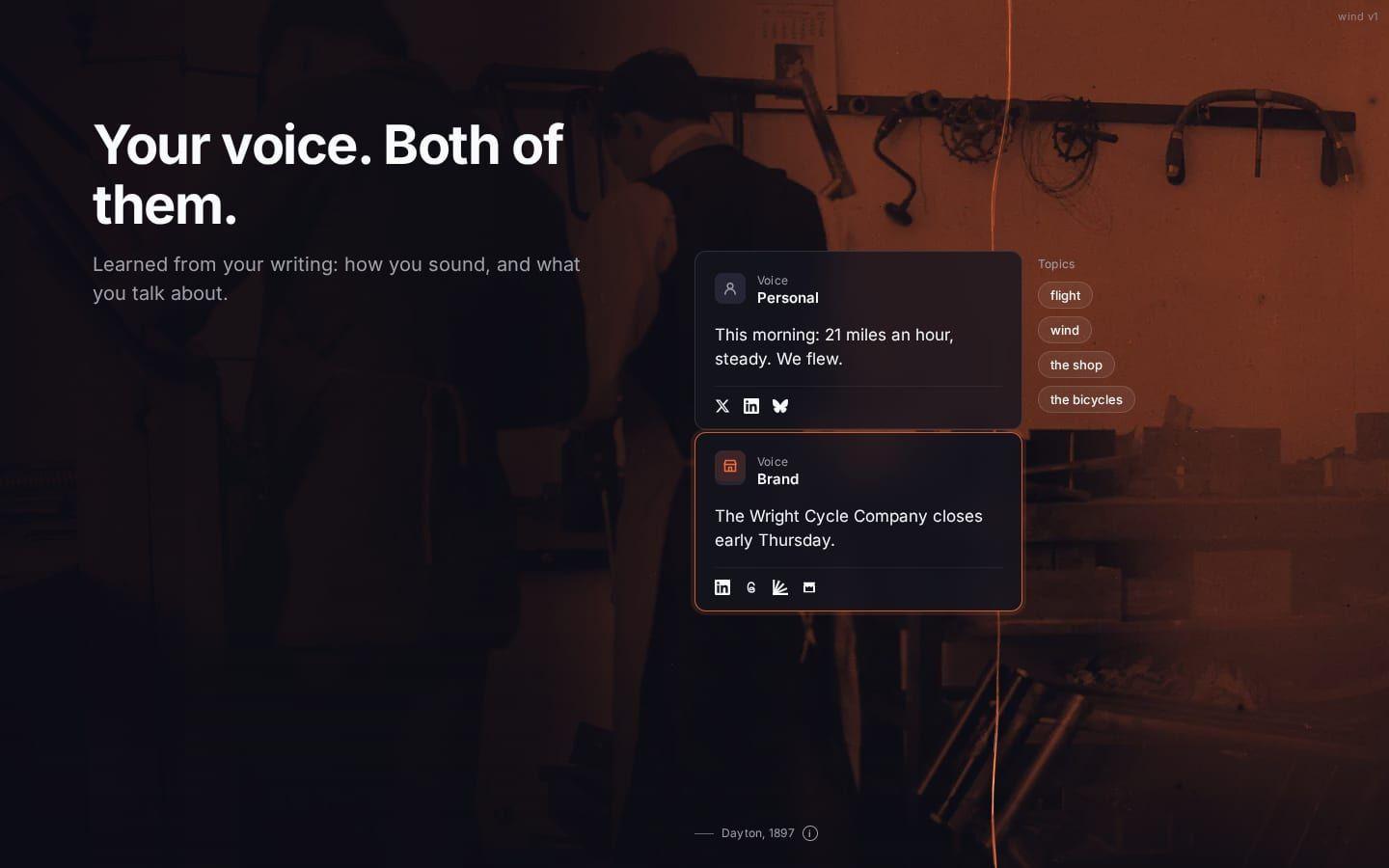
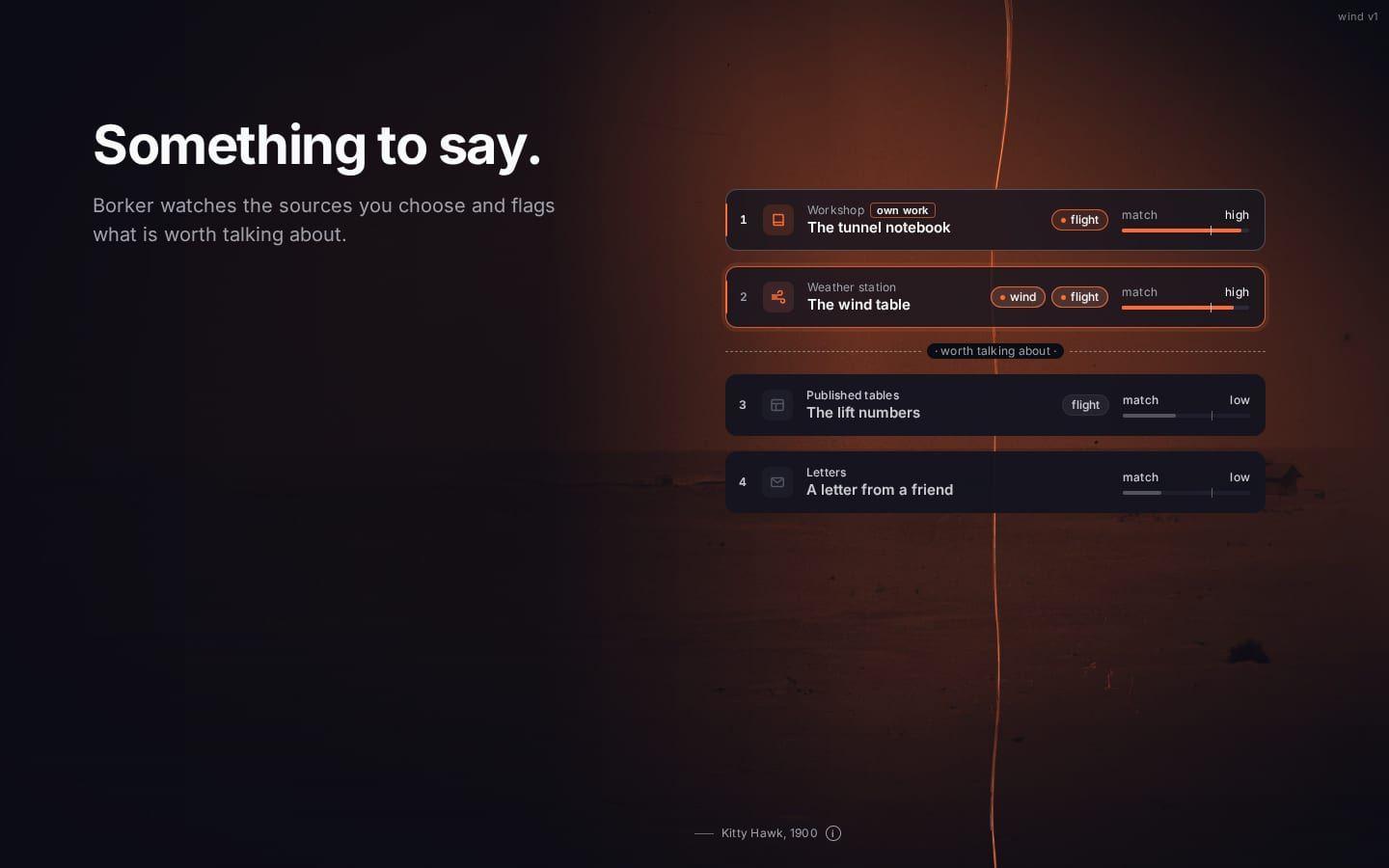
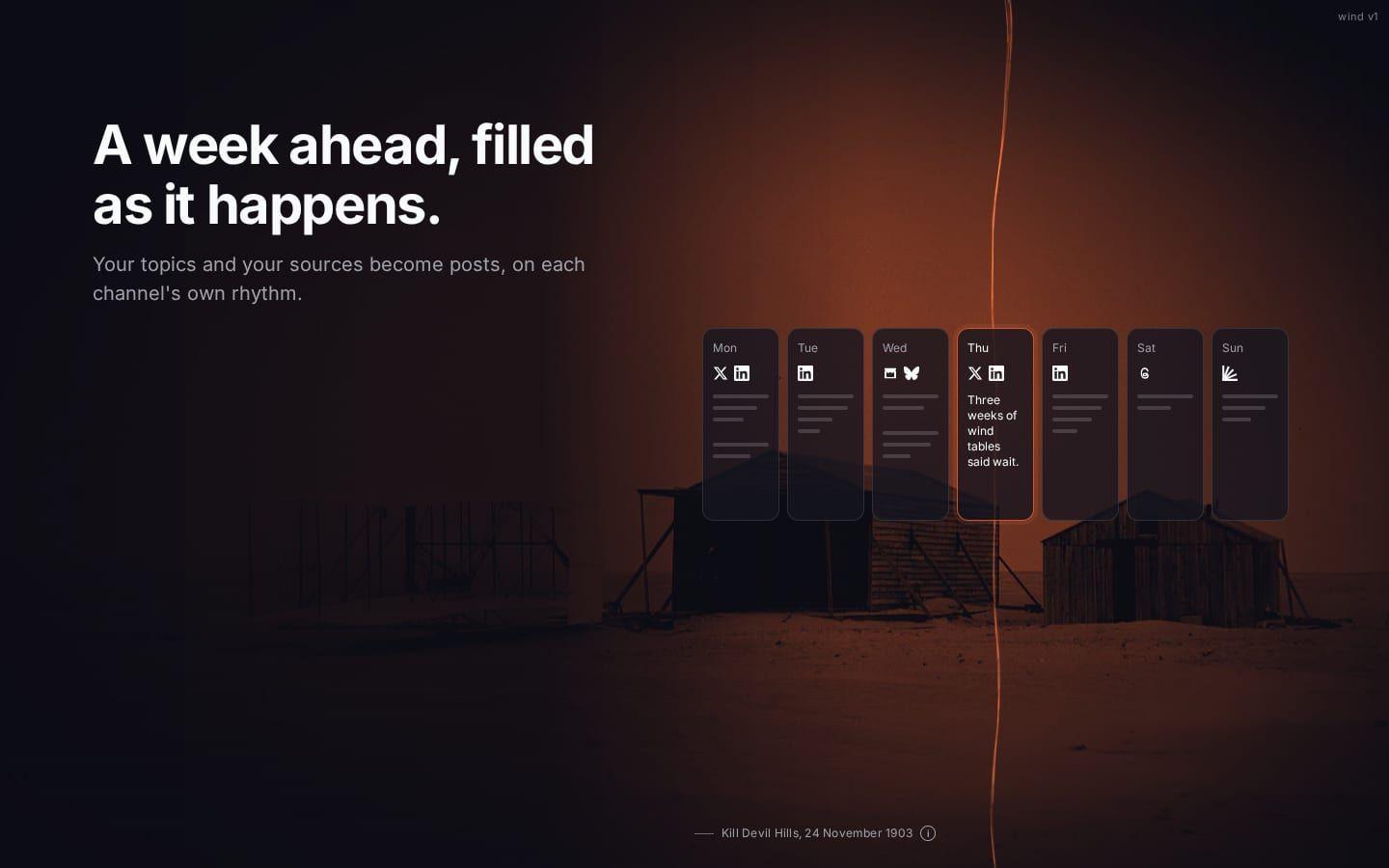
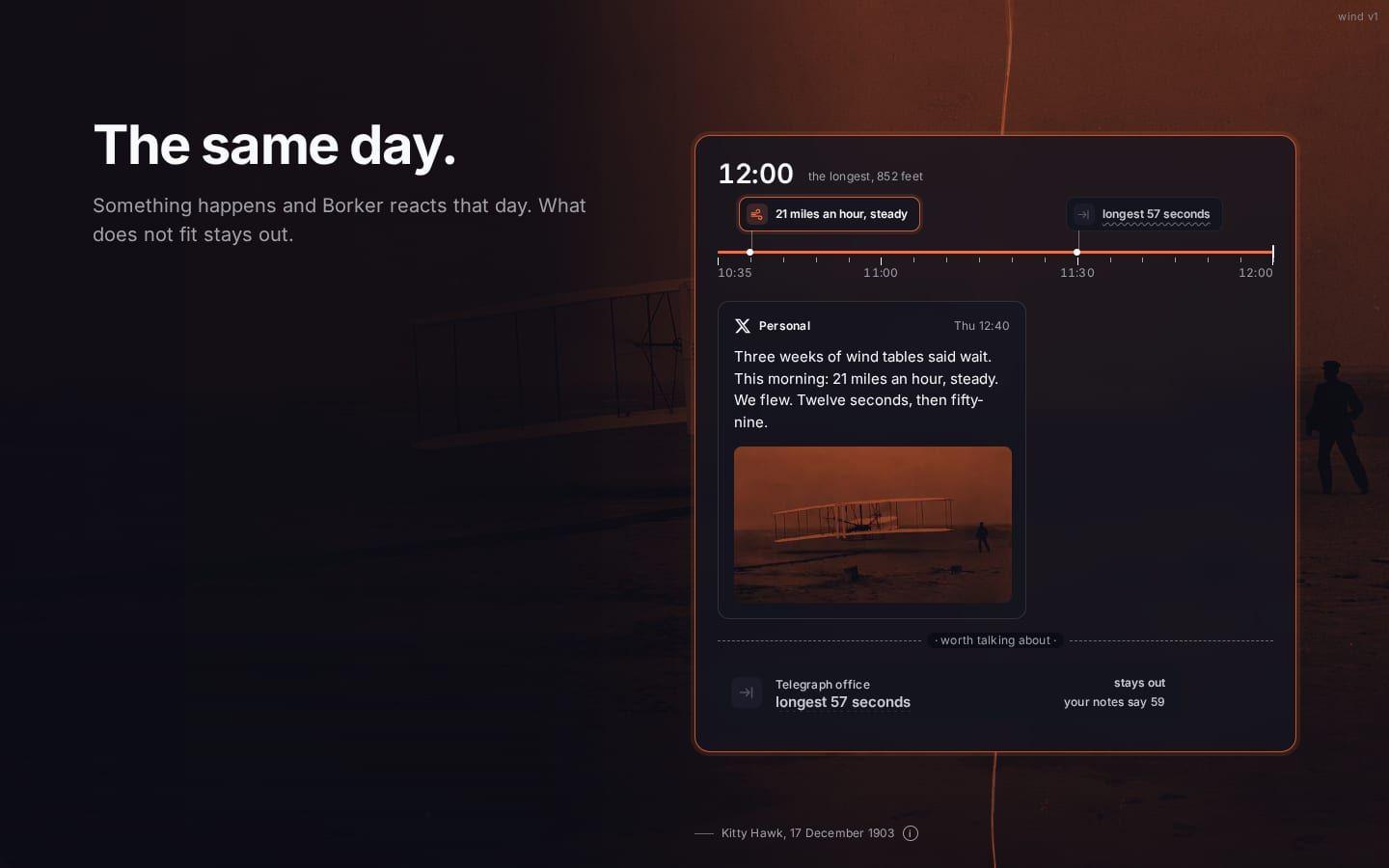
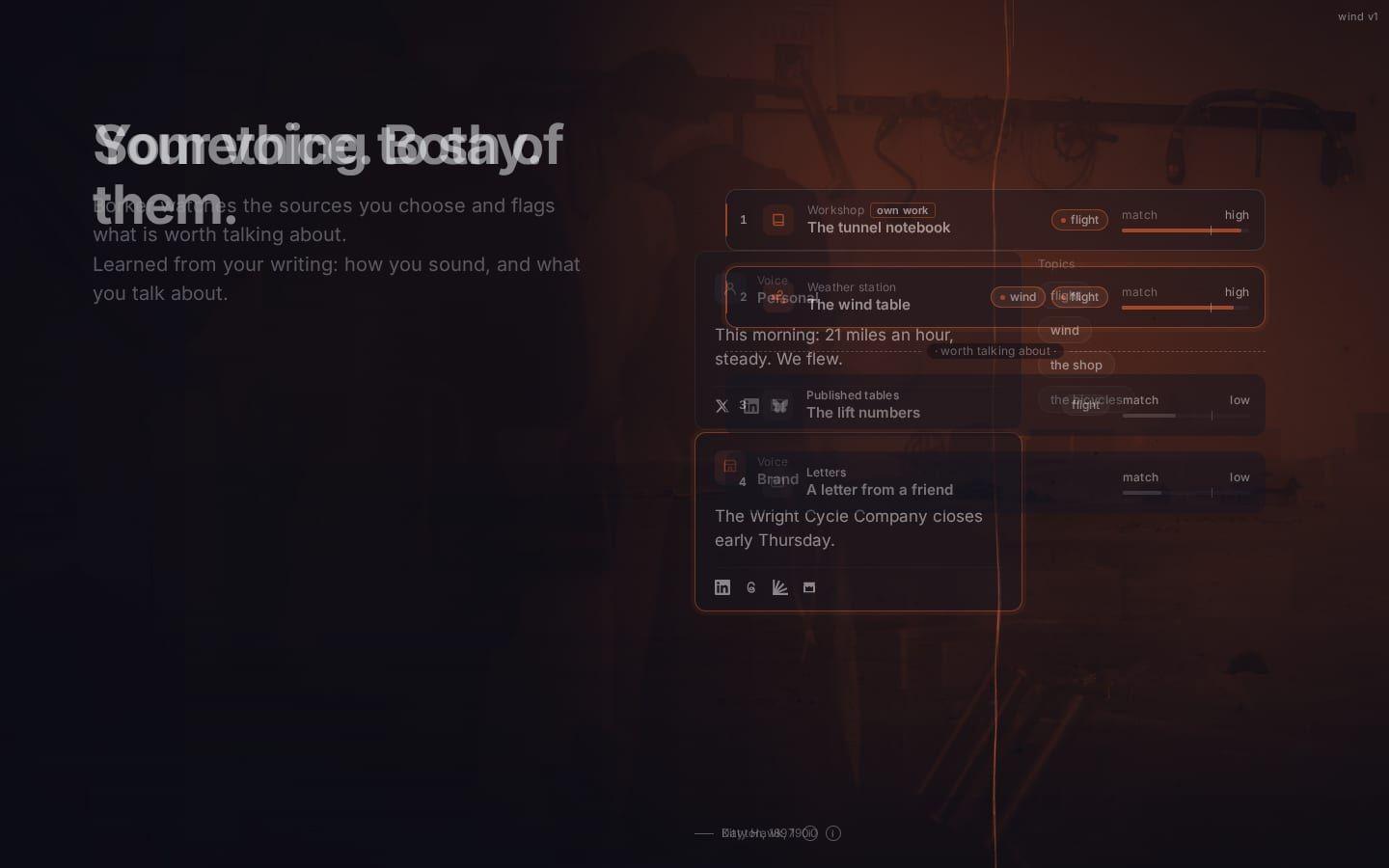
Four source rows arrive. One crosses the match line. The rows tile into the week and the flight day stays open. The time strip runs from 10:35 to noon, the wires arrive, one becomes a post and one sits below the line. Native CSS scroll-driven animation where the browser has it, a small script where it does not. Each frame complete at rest. With reduced motion on, the beats crossfade. With JavaScript off, three stills in order.
Round one failed
The first measurement ran against the CPU rule from part 6 and failed it three ways. The wind's own script was cheap, under half a millisecond a frame. The canvas paint and raster it triggered were not.
| Reading | Desktop |
|---|---|
| Paint and raster per drawn frame | about 8 milliseconds |
| Idle in view | a quarter of a core |
| The plan into The day | 43 frames per second, with frames over 60 milliseconds; 58 with the wind off |
The 2D canvas could not meet the rule at the setting I had chosen. The rule said what happens then: the wind moves to the GPU. The fix pass ported it to WebGL2, one object with the lab's keys and values, and the measurement ran again.
Round two
Desktop at 1440 by 900. Phone at 390 by 844 with a four-times CPU throttle and a mid-range Android profile. Headless Chromium with the machine's integrated GPU, over a local file, which is the first caveat: no real network, no real phone.
| Rule | Desktop | Phone, throttled | Result |
|---|---|---|---|
| Wind under 2 ms of main-thread time per frame | 0.35 ms per drawn frame idle, 0.22 ms scrolling | 0.13 ms idle, 0.09 ms scrolling | pass |
| Under 10 percent of one core, main thread, in view | 3.4 to 3.7 percent at rest, 6.6 percent scrolling | pass | |
| The same, counting the whole browser (renderer plus GPU process) | 21 percent at rest on one beat, 31 on another; 3.5 percent with the wind off | not measurable under the throttle | fail on this reading |
| Under 15 percent of one core on the throttled phone while scrolling | 4.3 percent | pass | |
| No transition under 50 frames per second on the phone | 59.8 on every transition | 59.8 to 60.0 | pass |
| Largest contentful paint under 2.5 seconds | 480 ms | 336 ms | pass |
| Cumulative layout shift under 0.1 | 0.00015 | 0 | pass |
| Weight under 800 kilobytes, the page file | 210 kilobytes | 210 kilobytes | pass |
| Weight under 800 kilobytes, everything fetched | 866 kilobytes | 538 kilobytes | fail on desktop by 66 |
| Reduced motion: stills with crossfades, no wind draws | 0 draws at rest and scrolling, only opacity animates | same | pass |
| JavaScript off: three stills in order | pass, no sideways scroll | pass | pass |
| Transition | Desktop fps | Phone fps | Worst half-second bin on the phone |
|---|---|---|---|
| Two voices into Sources | 59.8 | 60.0 | 60 |
| Sources into The plan | 59.8 | 59.8 | 58 |
| The plan into The day | 59.8 | 60.0 | 60 |
The desktop weight miss is the four plates at 1600 wide plus the font. It sits inside the page-wide image budget from the motion sheets, and the 800 kilobyte line was written for the act before the plates were counted at that width. Noted, not fixed, until the whole page is on the scale.
The whole-browser reading is the one that matters. Every number the rule names passes. But the wind at 30 draws a second keeps the renderer's compositor and the GPU process at a fifth to a third of a core while the page sits still, against 3.5 percent with the wind off. That is not script. It is compositing a full-resolution frame thirty times a second under the frosted cards. The rule as written passes. The laptop does not.
What the measurement cannot prove
The report says so itself, and I would rather say it here than have someone find out. What it cannot prove:
The last one is mine to judge by scrolling, and no headless run replaces it.
The builder also recorded every place the act deviates from the sheets. Nothing is quietly different:
- the entry state is the Two voices frame
- two source rows sit lower than drawn
- the wind table keeps rank two below the notebook
- the datelines crossfade faster than the plates
- one thread effect is not implemented
- the page is dark only, with no light scheme yet
The call
I scrolled it on the laptop and on the phone. The motion carries the concept. The animatic is the basis for the build, and the adjustments I can already see (to the wind, to some scroll behaviour, to some content) are deferred to the build and the polish after it, where they are easier to make on the real page than on a model of it. Build first, polish on the real thing.
The one sure thing: the wind must have no noticeable load on the visitor's device at all. A fifth of a core while idle is not acceptable for launch, whatever the rule's main-thread reading says. The likely direction is less dynamic. The candidates, in order of cost:
- A lower idle rate, or drawing only during transitions.
- The wind out from under the frosted surfaces.
- Fewer, longer strokes.
- A pre-rendered loop per beat.
- A still with a slow drift.
The lab stays the tool that produces the look, and whichever wins has to fit behind one small interface that reads one settings object: mount, set the beat, pause, resume, destroy. The page must not change when the wind does.
That interface is one line of a standing rule for the build: everything is a component, in an architecture that lets the site be extended, changed and edited easily from here on. One component per beat, fed by a storyline definition. One component per card from the kit. The plates as a manifest. The motion as a timeline table, with the native animation and the script fallback generated from it. The copy in one place. The page itself a short list of beats.
What happened next
The build, in its own package, with both presets and the switches, reduced motion and the measurement events. Then three rounds of review on the real page, the wind tuned by hand on the page itself, and a measurement of what it costs. That is part 8, and the new page is live.
The series: hub · part 1 · part 2 · part 3 · part 4 · part 5 · part 6 · part 7 · part 8
New here? Borker is the AI content engine for founders.
We learn your voice, read your sources, plan your week and write each post before it goes out, while you build the actual product.