How we rebuilt our landing page, in public: an eight-part series
By the Borker Team
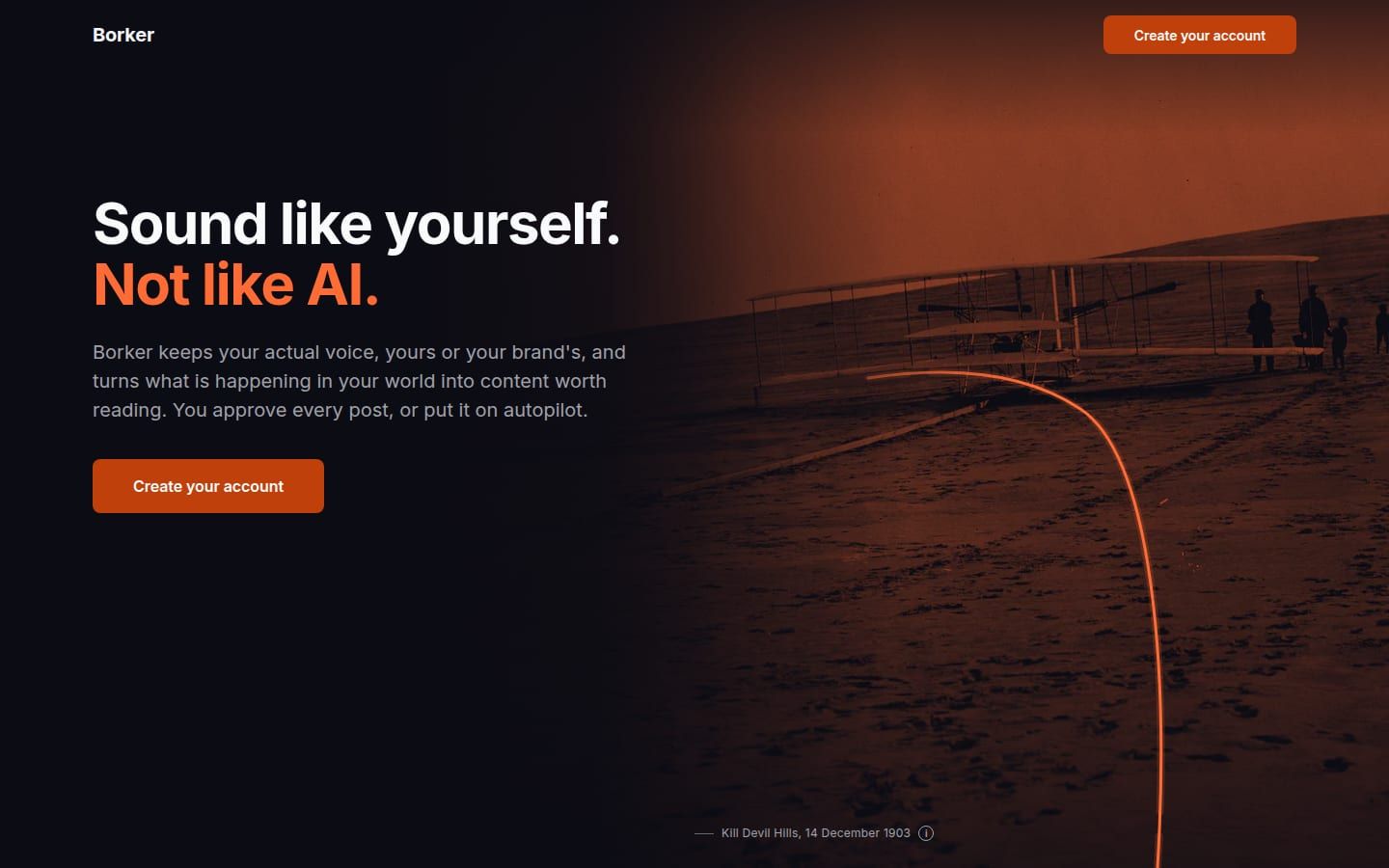
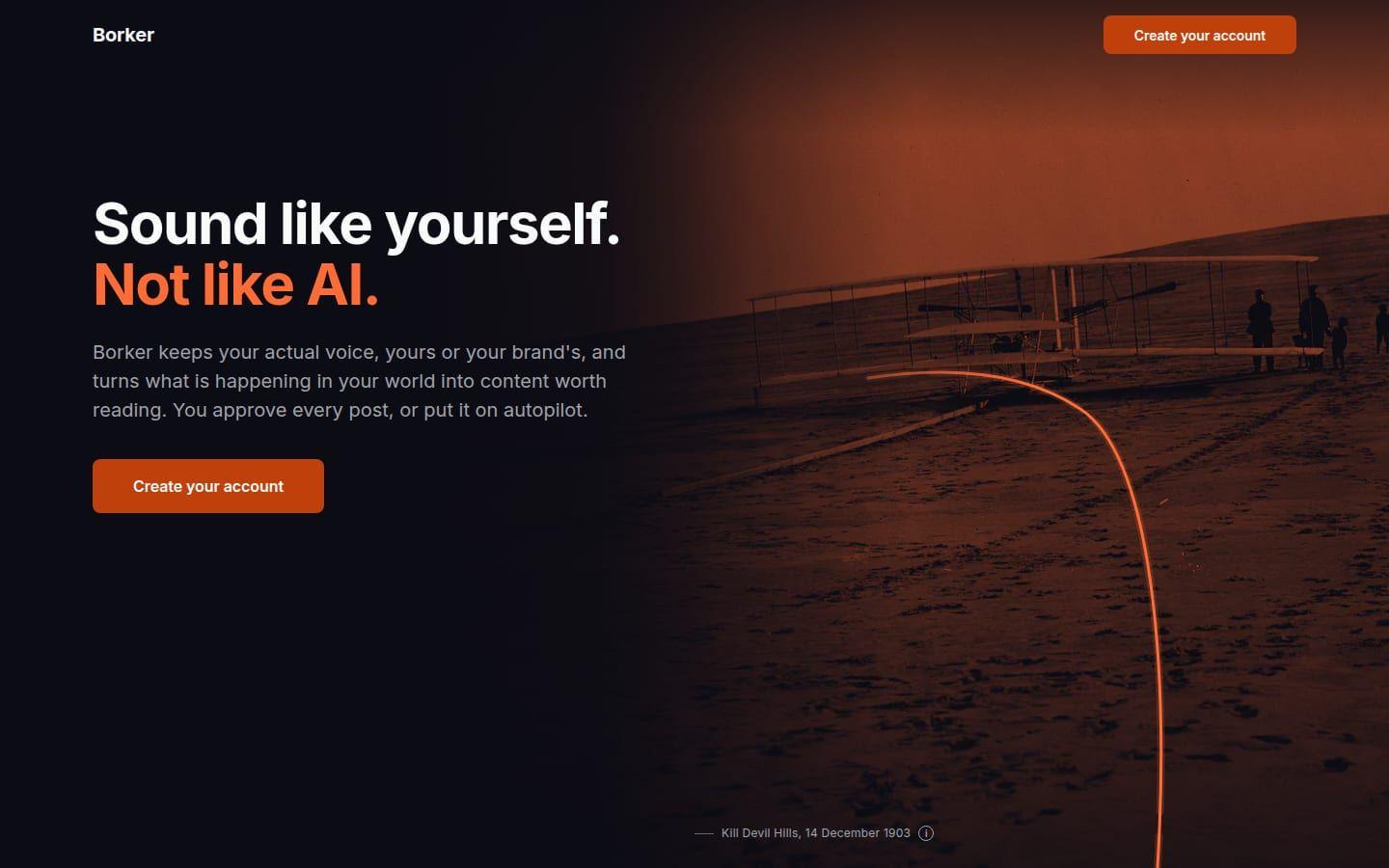
Our landing page has been rebuilt, and the new one is live. This series is the work that got it there, written while the page was still being built: what we decided at each stage, why, what we threw out, and the pictures from each checkpoint. The page is still being improved, and the post on what the rebuild took in full comes once the first weeks are in. Until then this is the record.
Why publish the work and not only the result? Borker's whole pitch is that you can keep a presence alive from what you are actually doing, without writing about it being a second job. This series is that pitch applied to ourselves. The artifacts already existed, because every stage of the rebuild produced one page I could scroll and rule on. Cutting them for a blog was the cheap part.
The eight parts
- We built Borker for engineers. That was the trap. Why the product was rebuilt as version three before the page could be, the four jobs of the rebuild, and what we deleted.
- Version three shipped. The landing page did not fit anymore. Cutover day, the one file every surface now quotes, what we may claim and may not, and the decision that every marketing surface tells a story.
- The brief we threw out, and the rules that replaced it. Three concepts, two critics, the research that survived and the rules we wrote instead of a brief.
- A story instead of a feature list. The persona hunt, why the Wright brothers won, the eleven beats, and the storyboard in grey boxes.
- No AI art. Eighteen glass plates from the Library of Congress, the treatment, three style directions side by side, and the locked look.
- The kit and the wind. The wind lab, the day the fans spun up, the CPU rule, and the asset kit with its motion sheets.
- One act built before the page. Three screens built for real, measured twice, the fix, the reading that still fails, and the call.
- The build, three rounds on the real page, and the wind by hand. Built as components, reviewed three times by scrolling, the wind tuned on the page itself and measured, what shipped, and what is still open.
The wind from part 6 is hosted as a page you can tune yourself: the wind lab. It is a lab, as we used it, not the finished page.
The rules we worked under
The same handful of rules bound every stage. They are repeated in the parts where they bit, and collected here once.
- The visual carries the meaning. A headline of six words or fewer and one line per beat. No paragraphs.
- Every beat is complete at rest. Motion is an addition, never a requirement to understand the page. Reduced motion gets crossfades.
- No real data, no live read, no customer or founder name on the page. Designed content only.
- No graphics drawn or generated by agents in the final product. The backgrounds are the Wright brothers' own photographs, treated by a script.
- No sentence names a channel. Channels show as their icons, read from the catalog.
- Our own copy rules: no em dashes, no sentence joined with a comma and "so", second person, no hype, no AI-isms, numbers in a table.
- In stages, each one a page to scroll. Nothing built before the stage before felt right.
- The wind may cost the visitor's device nothing noticeable.
New here? Borker is the AI content engine for founders.
We learn your voice, read your sources, plan your week and write each post before it goes out, while you build the actual product.