Landing rebuild, part 1: We built Borker for engineers. That was the trap.
By the Borker Team
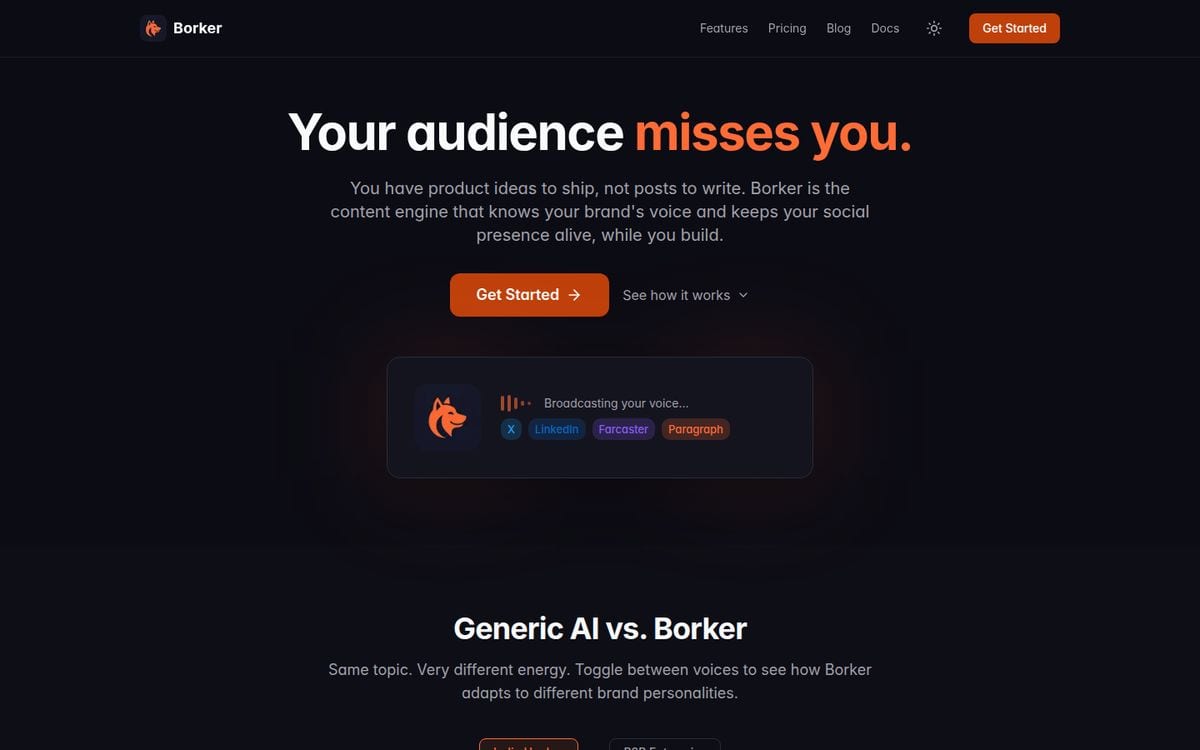
This is the first of eight parts on how we rebuilt our landing page, written while the page was still being built. The new page is live now, and still being improved. The series hub lists all seven. The landing page story starts with the product, because the page we had was an honest picture of the product we had, and both had the same problem.
How an engineer builds a product
Borker version one and version two were built the way an engineer builds anything. Ship a working piece. Watch people use it. Add what they ask for next. Repeat. We got customers that way, and we got good feedback, and the feedback drove the next feature, and the feature after that.
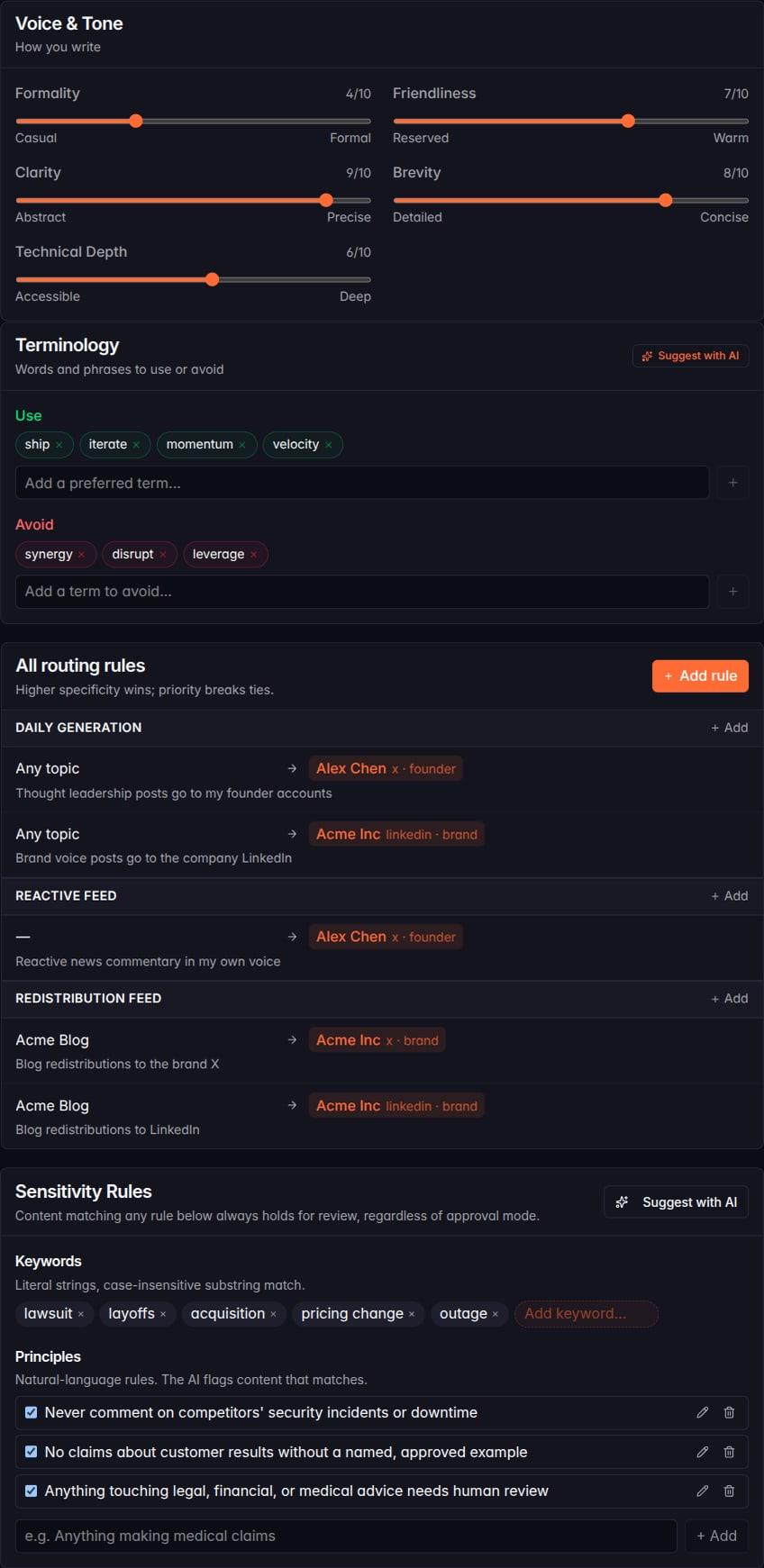
That loop produces a product with a setting for everything. By the middle of this year the settings had eleven tabs. Among them:
- Campaigns, with slots on a calendar.
- A rule table that decided which channel got what.
- A topic pool.
- A sensitivity keyword list.
- An allowlist for the AI-ism checker.
- Five sliders for the voice: formality, friendliness, clarity, brevity, technical depth.
A daily run read all of it and wrote the day's posts.
An engineer can drive that. I could drive it. Nobody else wanted to.
Seeing the trap
Two things happened in August. We did a long competitive read of the market we were in, and a founder we know well tried Borker for the first time and quit onboarding at step four of seven. The note we kept from that run: show me it is good before you make me configure anything.
Put those next to each other and the trap was plain. I had built a tool for other engineers. The people it was meant for, founders and professionals with real opinions and no time to post, do not want to operate dials. They want the outcome. They will not learn a system. And the product's own output was generic but on brand, which is its own kind of failure: the voice without the substance, because every topic we had pointed the engine at was shallow.
The sentence that reorganised the plan: users want the outcome, not the machine.
The four jobs of version three
We wrote the rebuild down as four jobs.
- Make it simple. Onboarding proves the product by showing a full week of posts already written in your voice, before you touch a setting. Strategy settings get stated in plain language. Plumbing settings (channels, billing) stay as plain buttons, because nobody wants to describe connecting an account in prose.
- Make it something your own agents can drive. An agent API and an MCP, with the whole pipeline behind them. Your agents can draft, schedule, read the stats, and supply what you are building. Borker's own blog and build log run through it.
- Make the voice sound like you. Learned from what you actually wrote, plus the rules you keep. Never "solved", because voice authenticity is a thing we keep working on and say so.
- Two voices in one workspace. A personal voice and a brand voice, side by side. Every channel carries one of them, and the channel decides which.
What we deleted
The rebuild was a hard cutover. One codebase, no feature flags, no dual paths, each phase replacing its slice of the old system and deleting what it replaced in the same change. With a handful of workspaces that is the right trade: a bigger single event in exchange for clean code and no hybrid to maintain.
| Went | Came |
|---|---|
| Campaigns and calendar slots | Destinations: every connected channel carries a voice and a share of the week |
| The rule table deciding which channel got what | The plan picks the channel before anything is drafted |
| Five voice sliders | Rules distilled from your writing, in words you can read and edit |
| A daily run that wrote the day | A night compile that writes the week ahead, and same-day reactions when a source crosses the line |
| Feeds as a list to manage | Sources with a match level: what crossed the line and why |
| Approve, or auto-publish | Approve every post, or autopilot with the sensitivity and quality gates still applied |
| A settings surface with eleven tabs | A strategy you state in plain language, with the switches one click deeper |
We planned a few weeks. It took from early August to the middle of October. The design record alone has close to a hundred rulings in it, and every one of them was argued over a real screen before it was built.
Why this is part one of a landing page story
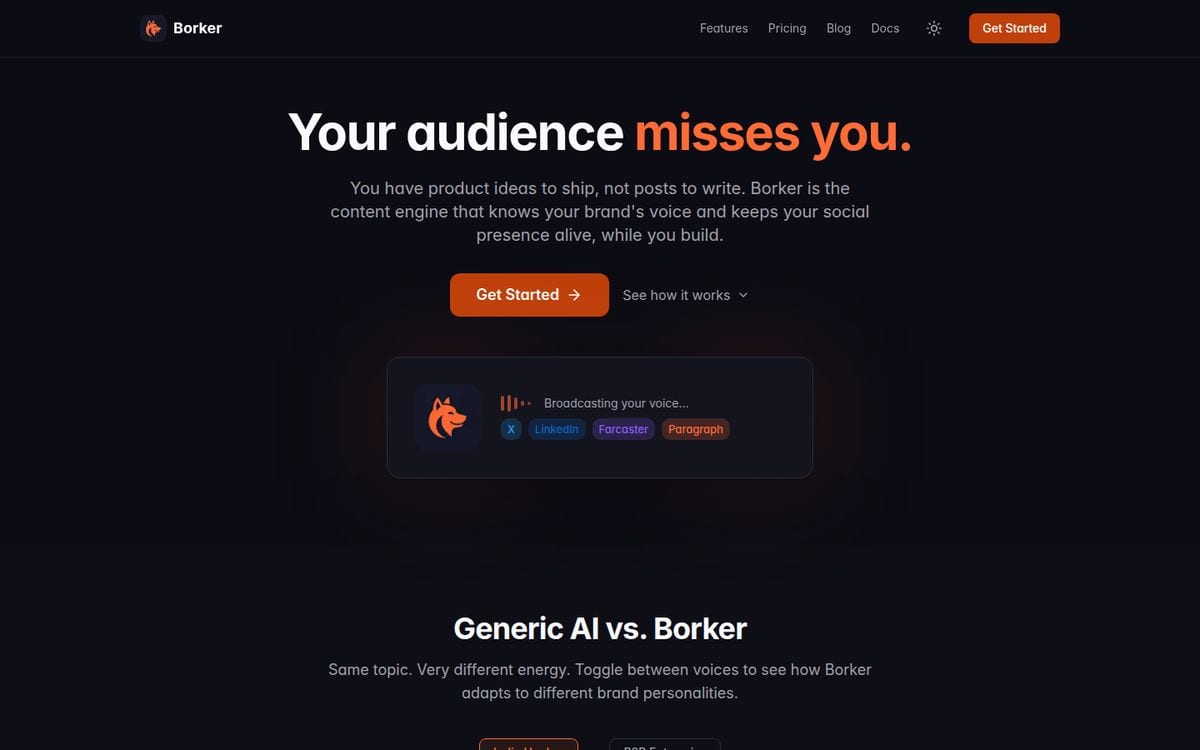
Version three was the right call. It also set up the next problem. On the day it went live I went to look at the landing page, and the page still sold the product we had just deleted. That is part 2.
The series: hub · part 1 · part 2 · part 3 · part 4 · part 5 · part 6 · part 7 · part 8
New here? Borker is the AI content engine for founders.
We learn your voice, read your sources, plan your week and write each post before it goes out, while you build the actual product.